


⏳EAR PIERCING HEALING GUIDE
Lobes Heal in Months. Cartilage Requires More Patience.
Most standard lobe and second-lobe piercings need approximately 3–4 months to fully heal. Ear cartilage piercings—including the helix, forward helix, flat, conch, tragus, rook and daith—commonly need around 10–12 months or longer.
A piercing may look calm on the outside before the internal channel is mature. Placement, anatomy, jewelry fit, pressure, aftercare and accidental trauma all influence the real timeline, so use healing ranges as planning guidance rather than promises.
Approximately 3–4 months
Approximately 10–12 months+
Evaluation is not full healing
Professional fit comes first
📊ANSWER THE MAIN QUESTION FIRST
Ear Piercing Healing Times at a Glance
These are conservative Nina Wynn planning ranges. A professional check-in, a post downsize, a decorative jewelry change and complete healing are separate milestones.
| Ear Piercing Location | Professional Check-In | Approximate Full Healing |
|---|---|---|
|
Standard Lobe / Second Lobe Soft lower-ear tissue |
Commonly around 3–4 months, or sooner when fit needs attention | About 3–4 months |
|
Helix / Forward Helix / Flat Outer and upper cartilage |
Healing and fit review around 12–16 weeks | About 10–12 months+ |
|
Tragus / Conch Center and inner-ear cartilage |
Healing and fit review around 12–16 weeks | About 10–12 months+ |
|
Rook / Daith / Snug / Anti-Tragus Folded or dense cartilage |
Professional review based on swelling, anatomy and jewelry style | About 10–12 months or longer |
|
Industrial Piercing Two cartilage channels connected by one bar |
Both channels and their alignment require professional review | About 10–12 months or longer |
Do not treat the calendar as the only test. Your piercer may recommend leaving the jewelry in place, changing only the post length or waiting longer before changing the style.
🧬PLACEMENT, FIT & DAILY LIFE
Why Do Ear Piercing Healing Times Vary?
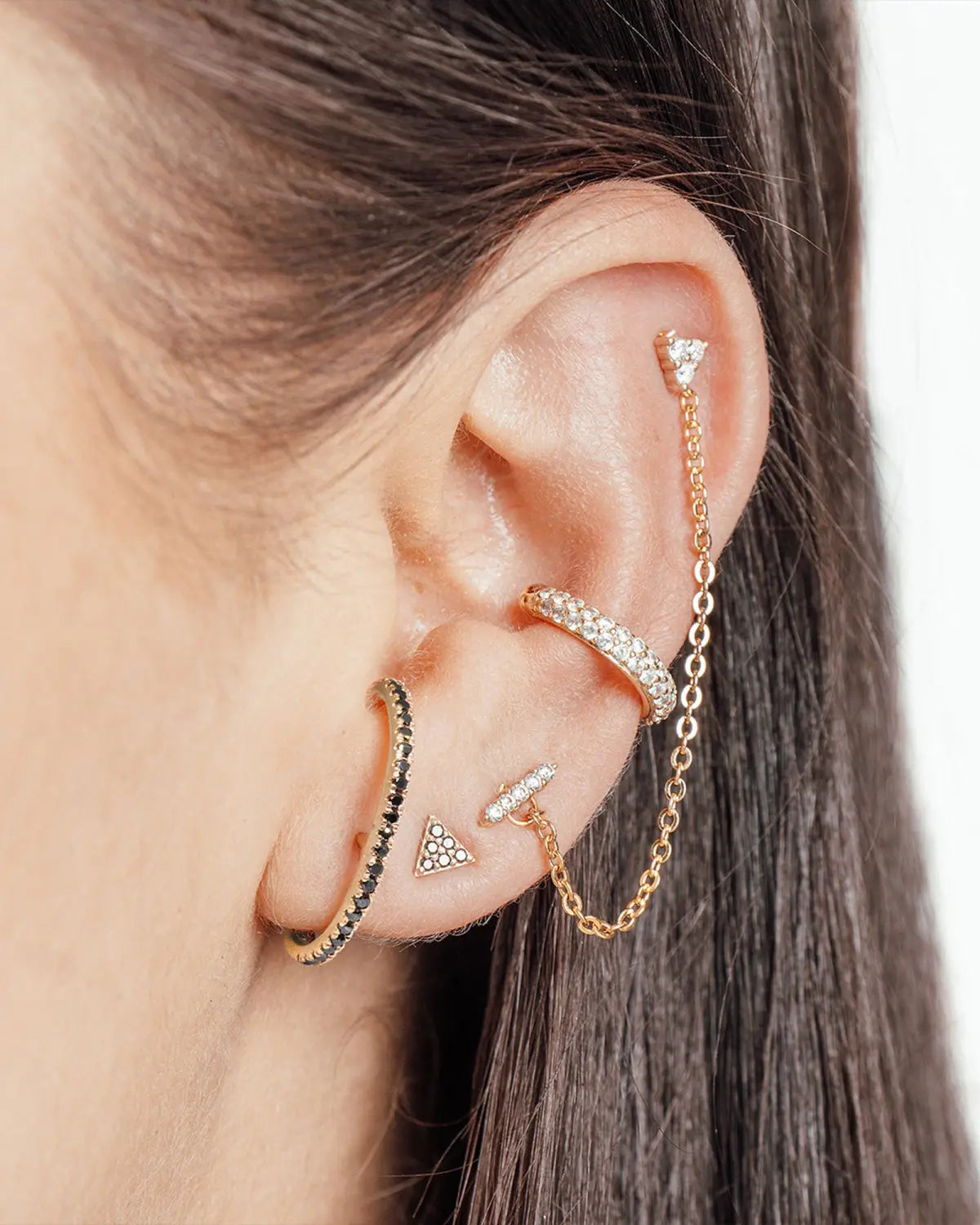
“Ear piercing” describes several very different wounds. A lobe passes through soft tissue with stronger circulation, while a helix, conch, tragus or rook passes through firmer cartilage with less blood supply.
Healing also varies with age, immune health, nutrition, stress, medications, smoking or nicotine exposure, cleaning habits and accidental trauma. The goal is not to beat the timeline; it is to create stable conditions so the body is not repeatedly restarting the irritation cycle.
👂Placement & Anatomy
Soft lobe tissue, thin cartilage, dense folds and connected industrial channels do not heal on the same schedule.
💎Jewelry Fit
Jewelry must allow early swelling without remaining so long that it catches, moves excessively or changes the angle.
🛡️Daily Pressure
Sleeping, headphones, phones, glasses, helmets, hair and clothing can repeatedly irritate a healing channel.
💧Aftercare Habits
Over-cleaning, twisting, harsh products or frequent jewelry changes can prolong a process that needs consistency.
⏳HEALING IS NOT A STRAIGHT LINE
The Four Main Ear Piercing Healing Stages
A piercing can feel quiet for weeks and become tender again after pressure, snagging or a premature jewelry change. A temporary setback does not always mean the piercing has returned to day one, but it does mean the tissue needs protection.
Early Swelling
Localized warmth, tenderness, mild swelling, bruising or a small amount of bleeding may occur. Initial jewelry needs room for this response.
Surface Repair
Redness should gradually settle. Itching, light discoloration and whitish-yellow fluid that dries into crust can occur during normal healing.
Internal Maturation
The outside may look healed while the inner channel remains fragile. Pressure and movement can still trigger soreness or swelling.
Stable Channel
The tissue is consistently calm and mature enough for a professionally assessed jewelry change. Cartilage may take a year or longer.
📍PROFESSIONAL PIERCING & HEALING SUPPORT
Visit a Nina Wynn Piercing Studio
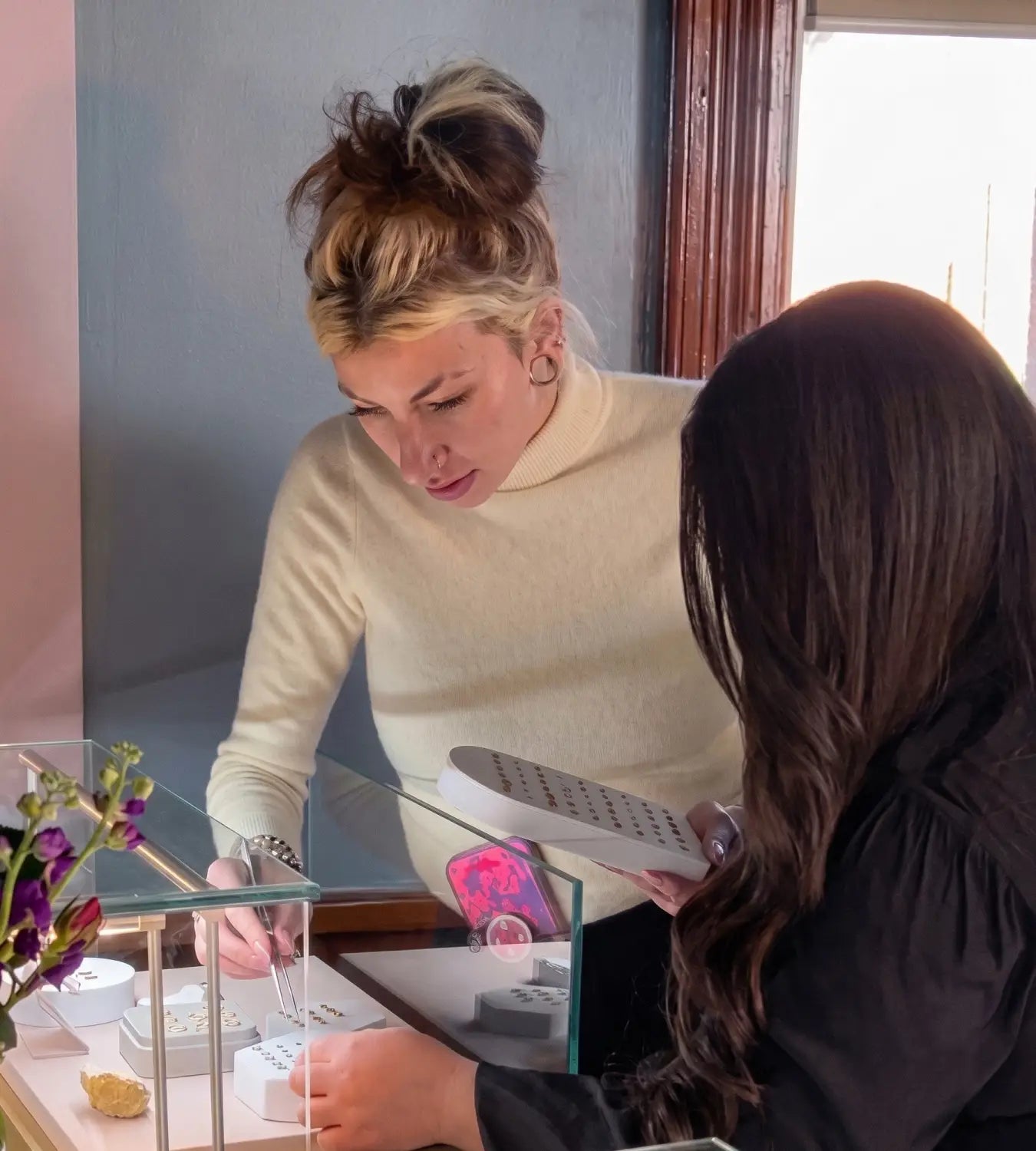
Begin with professional needle piercing, anatomy-aware placement and jewelry selected for your swelling, lifestyle and long-term styling goals.
Nina Wynn locations support clients with healing check-ins, jewelry-fit guidance, Ear Spa services and fine piercing jewelry. The locations hub is designed to remain useful as additional studios open beyond the Denver Metro area.
Denver healing note: Dry air can make the skin around the ear feel dry, but do not place oils, lotions or heavy ointments in a healing piercing channel unless a qualified professional specifically directs you to do so.
- Professional needle piercing
- Healing and jewelry-fit guidance
- Fine flat backs and cartilage jewelry
- Current studio details in one location hub

👂SOFT-TISSUE HEALING
How Long Do Lobe Piercings Take to Heal?
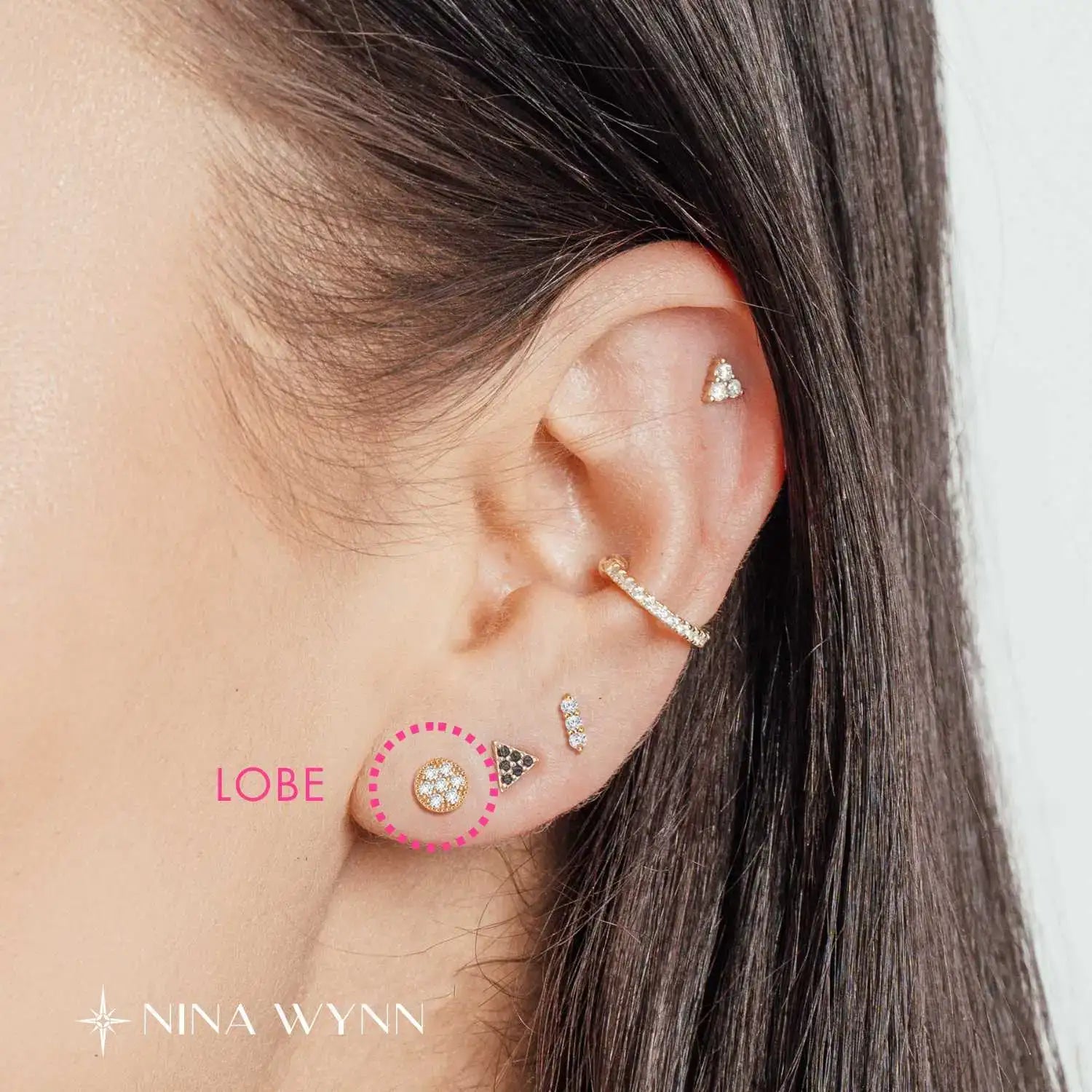
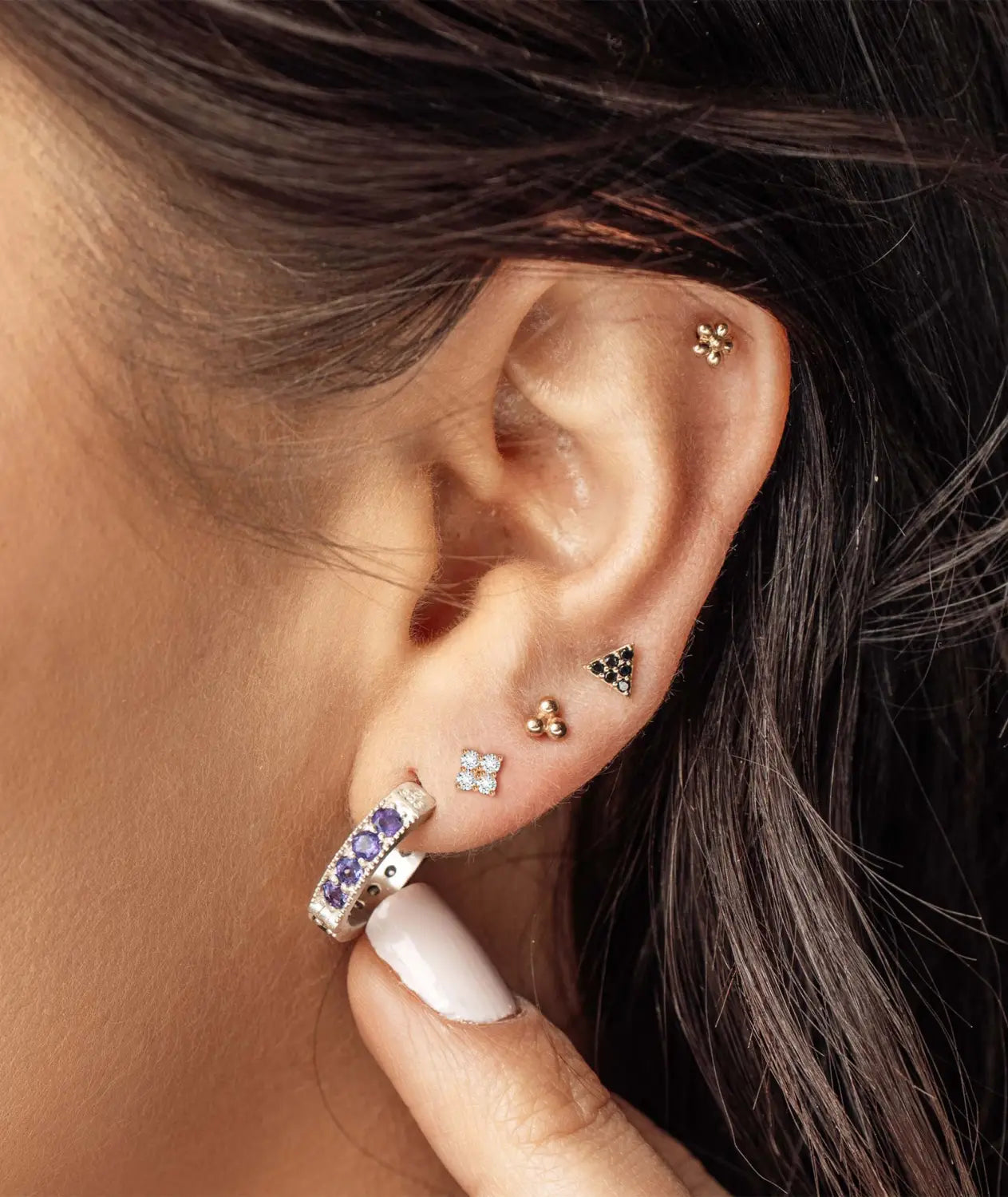
Standard lobe and second-lobe piercings commonly need about 3–4 months to fully heal. They often settle faster than cartilage because the lobe is soft tissue with stronger circulation.
Even so, a lobe that looks normal after several weeks may remain delicate internally. Repeated earring changes, pressure from sleeping and a post that is too tight or too long can prolong soreness.
Do Upper-Lobe Piercings Take Longer?
They can. A high lobe may sit close to cartilage or pass through a combination of tissues. Placement—not the name alone—determines whether the realistic timeline should be closer to a lobe or cartilage schedule.
The surface may look calm while the channel is still fragile. Nina Wynn uses a more conservative planning range and recommends professional assessment before a fit or style change.
✨LONGER-TERM CARTILAGE HEALING
How Long Do Cartilage Piercings Take to Heal?
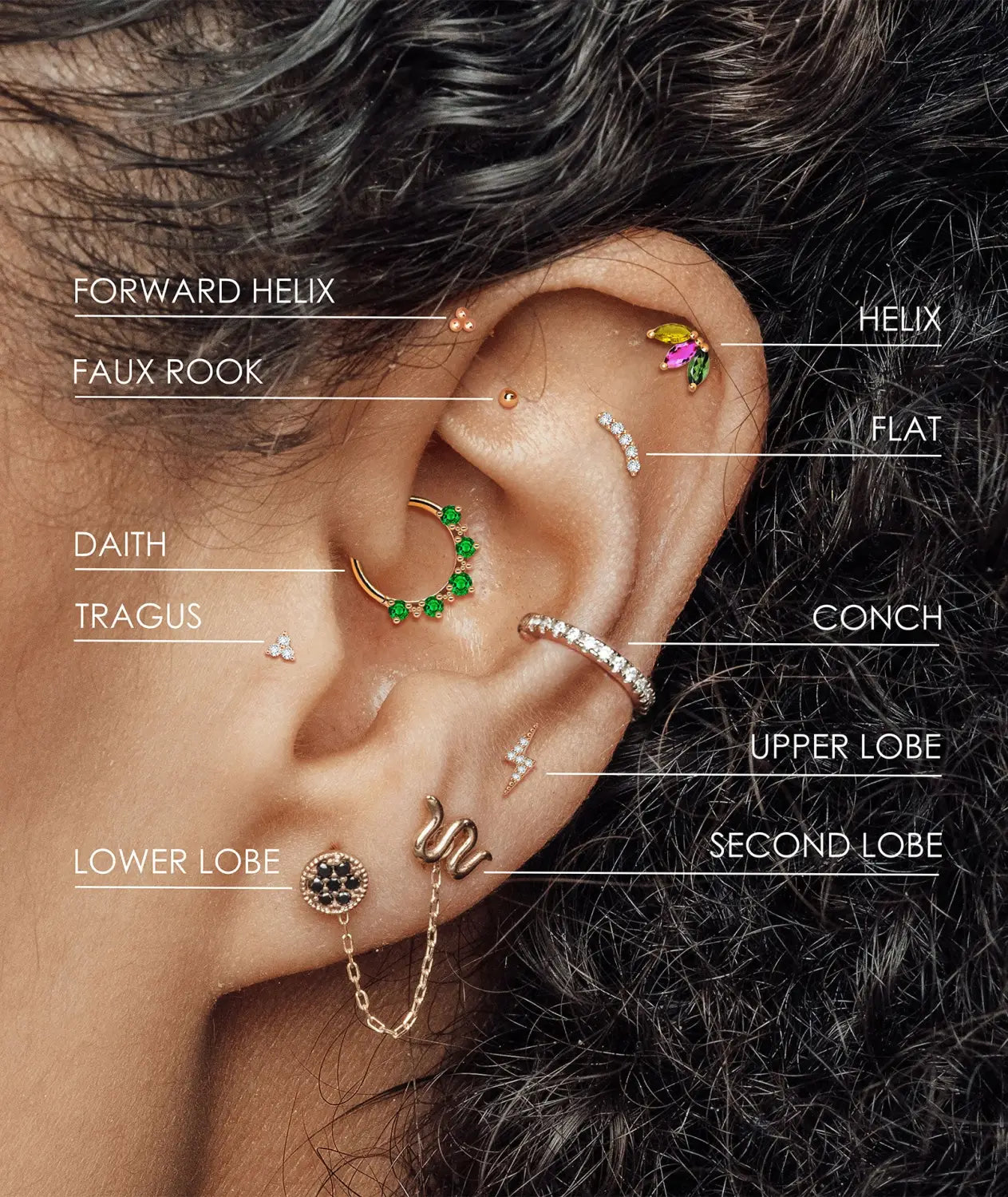
Most ear cartilage piercings should be planned around a 10–12 month healing period, with some taking longer.
This includes the helix, forward helix, flat, conch, tragus, rook and daith.
↗️Outer Cartilage
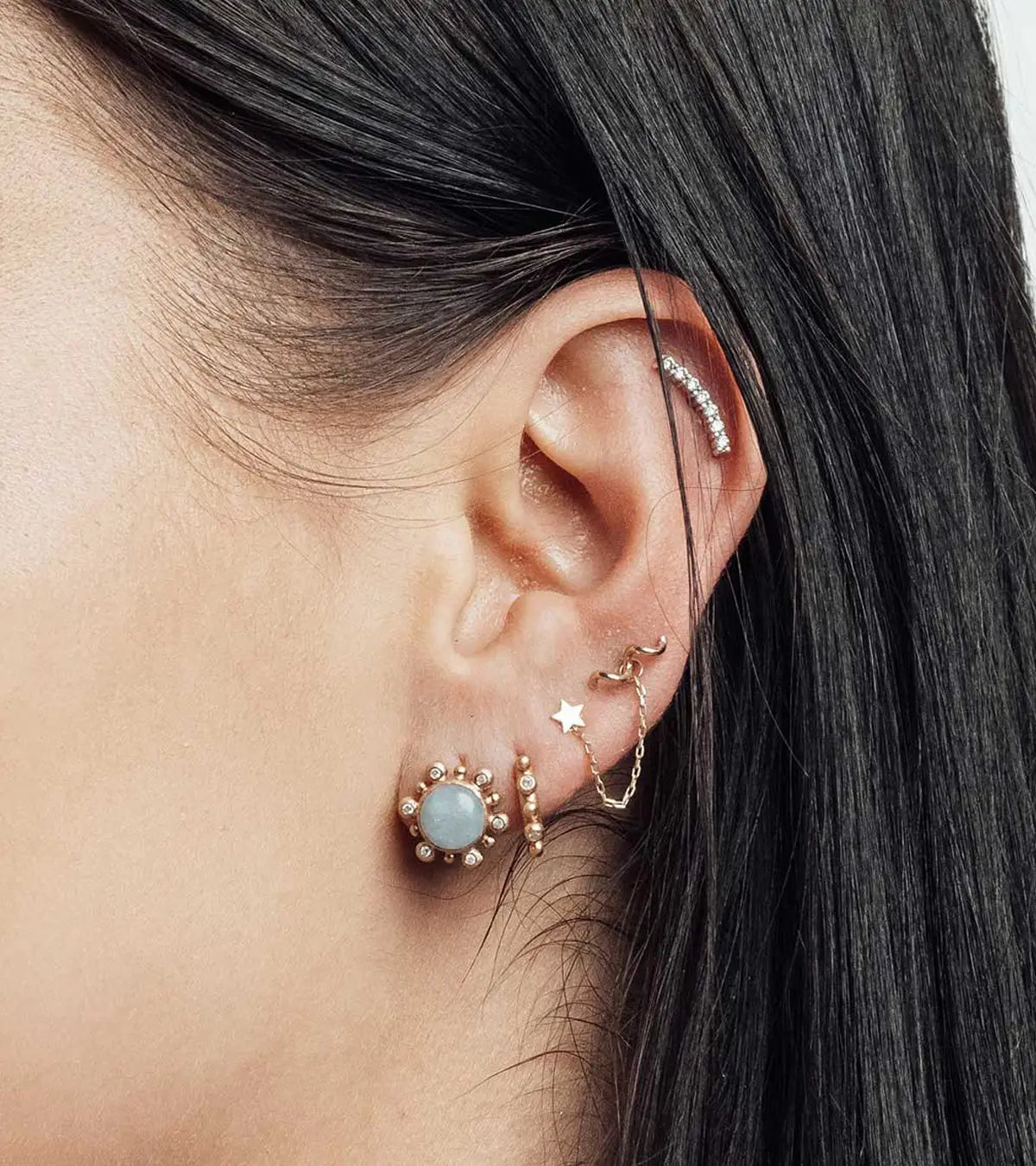
Helix, forward helix and flat: sleeping pressure, hair, glasses, hats and headphones can affect angle stability.
◉Inner Cartilage
Conch, tragus, rook and daith: earbuds, phones, anatomy folds and specialized jewelry shapes influence comfort.
An industrial joins two cartilage channels with one bar, so both channels and their relationship must remain stable. Snug and anti-tragus placements pass through dense or folded cartilage and may also require extended patience.
😴PROTECT THE ANGLE
Can You Sleep on a Fresh Ear Piercing?
Avoid sleeping directly on a healing piercing—especially cartilage. Repeated overnight pressure can cause irritation, swelling and a shift in the piercing angle.
A travel or piercing pillow can create an opening for the ear while your head remains supported. Do not assume the placement is protected simply because it no longer hurts during the day.
Keep pillowcases and bedding clean.
Use a pillow with an opening for the ear.
Clean headphones, phones and glasses.
Tell your hair stylist about new piercings.
🔍LOOK FOR CONSISTENCY, NOT ONE GOOD DAY
How Can You Tell If an Ear Piercing Is Healed?
A mature piercing should be consistently calm. It should not be tender, swollen, hot, actively crusting or easily irritated by normal movement. Even then, the internal channel may be less mature than it appears from the outside.
SIGNS IT MAY BE MATURING WELL
Comfort Remains Stable
- Swelling and redness have resolved.
- There is no recurring discharge or crusting.
- The jewelry is not embedding, pulling or sitting at a changed angle.
- Minor daily movement does not trigger renewed tenderness.
- A professional piercer agrees the channel is ready.
SIGNS IT NEEDS MORE TIME OR EVALUATION
Irritation Keeps Returning
- Tenderness returns after minor pressure.
- The area repeatedly swells or develops a bump.
- Crusting or fluid continues in cycles.
- The post looks too long, too tight or angled.
- You are relying only on elapsed time.
⚠️KNOW WHEN TO ASK FOR HELP
What Is Normal Piercing Swelling vs. a Possible Infection?
Some localized swelling, tenderness, bruising, itching, discoloration and light crusting can be part of normal healing. The overall pattern should gradually improve. Worsening symptoms require prompt professional attention.
| Often Seen During Normal Healing | Contact a Healthcare Professional Promptly |
|---|---|
| Localized tenderness that gradually decreases | Pain, heat, redness or swelling that is worsening or spreading |
| Small amount of whitish-yellow fluid that dries into crust | Foul-smelling, thick yellow or green discharge |
| Mild itching or temporary discoloration | Fever, chills, significant illness or swollen lymph nodes |
| Brief soreness after an accidental snag | Jewelry that is embedded or tissue swelling over the jewelry |
Do not diagnose infection from a photograph alone, and do not remove jewelry from a suspected infection unless a healthcare professional advises you to do so. A piercer evaluates fit and irritation; a healthcare professional diagnoses and treats infection.
↕️FIT ADJUSTMENT IS NOT FULL HEALING
When Should Piercing Jewelry Be Downsized?
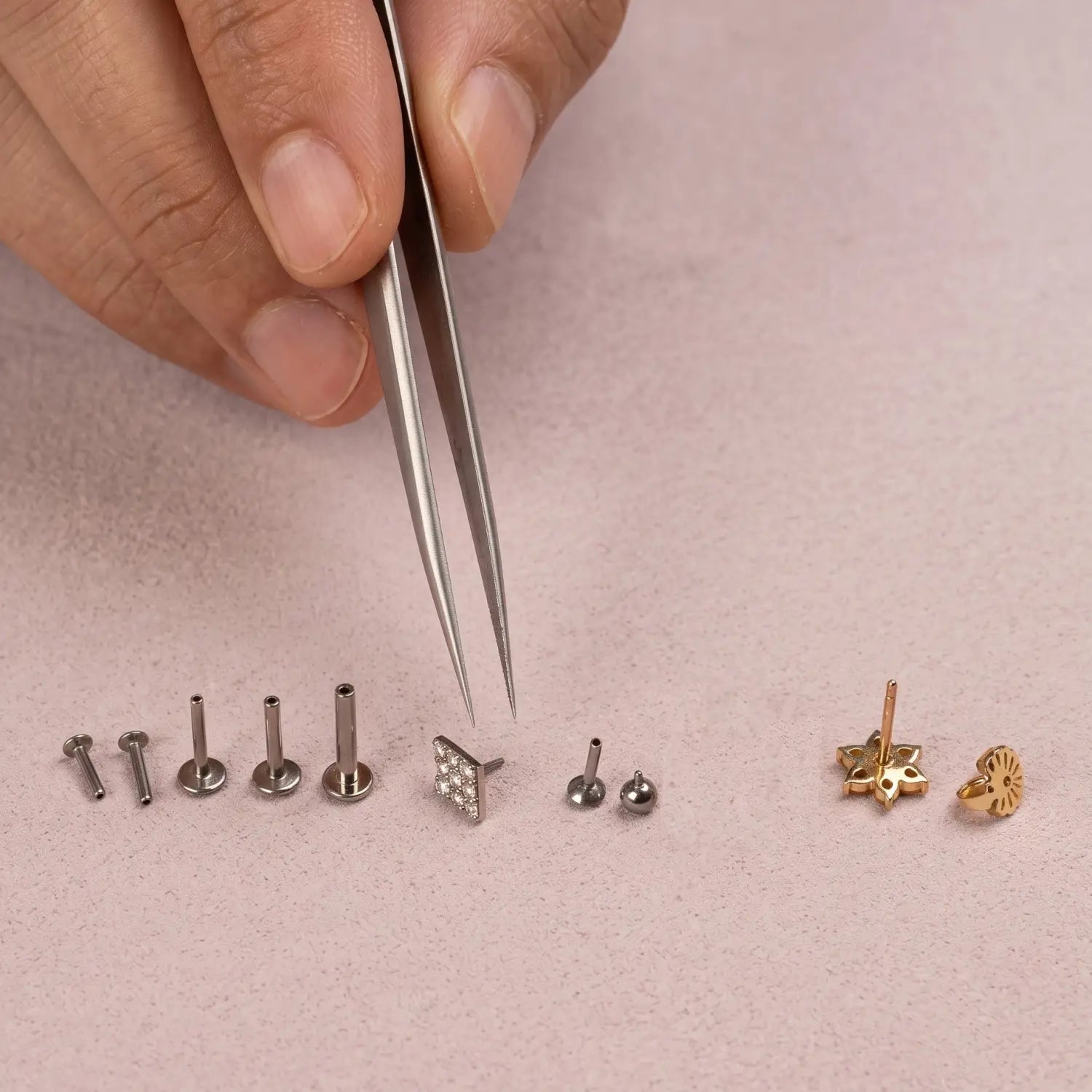
Downsizing is a professional fit adjustment in which a longer initial post is replaced with a shorter post after swelling has reduced and the tissue is ready.
It is not the same as changing to a hoop, replacing jewelry for fashion or declaring the piercing fully healed. Nina Wynn’s current guidance generally evaluates lobe jewelry around 3–4 months and cartilage around 12–16 weeks, while full cartilage healing can still require approximately 10 months or longer.
Initial Post
Extra wearable length accommodates early swelling.
Fit Review
A piercer checks swelling, angle, pressure and movement.
Future Styling
Decorative changes wait until the channel can tolerate new movement.
💧GENTLE, CONSISTENT CARE
What Helps an Ear Piercing Heal Well?
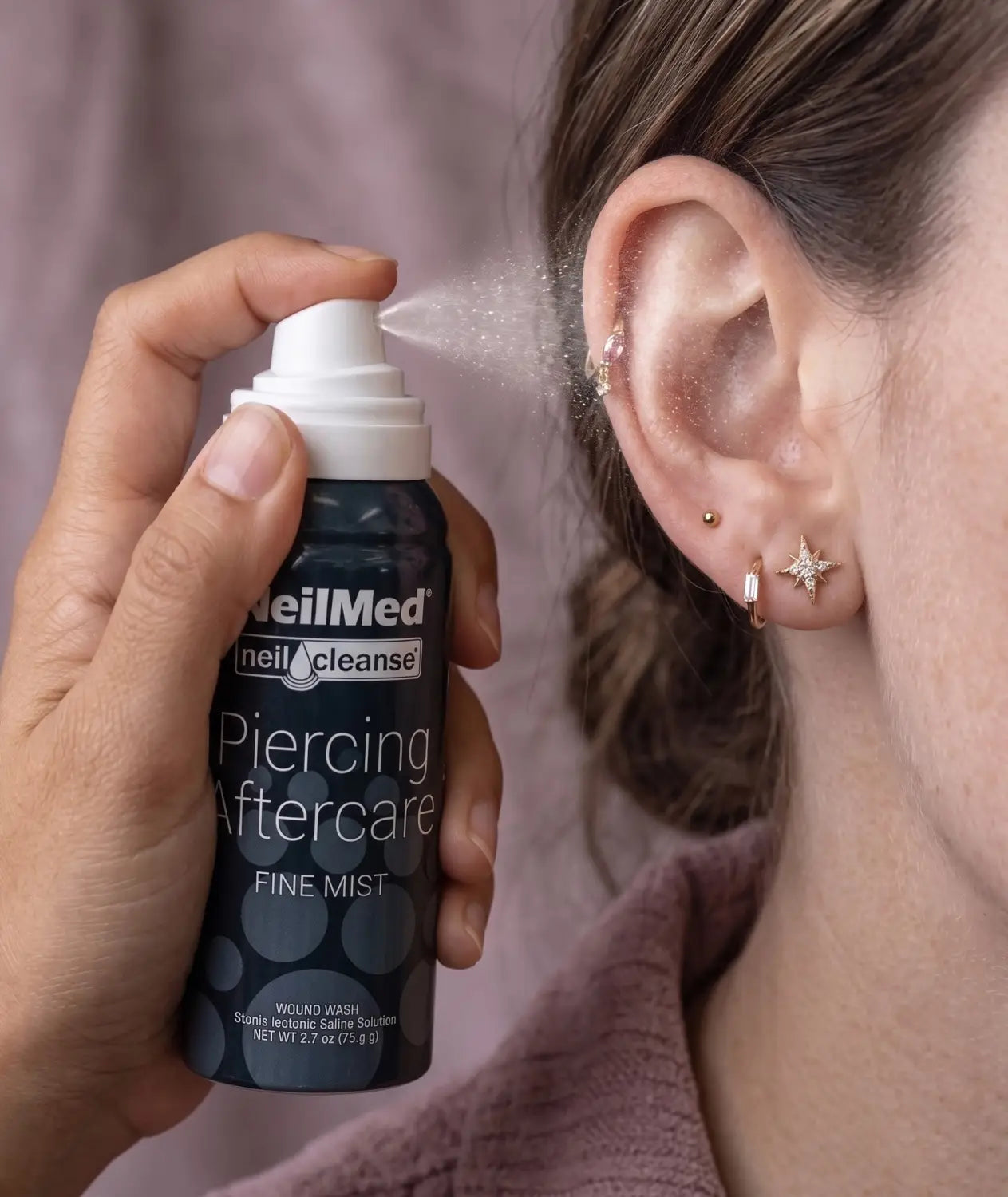
More cleaning is not automatically better. Leave the jewelry alone except when cleaning, avoid rotation and use sterile saline wound wash rather than homemade salt mixtures or harsh products.
✅Helpful Healing Habits
- Wash your hands before touching the area.
- Use sterile saline wound wash as directed.
- Dry gently with a clean disposable product.
- Keep bedding, phones, glasses and headphones clean.
- Protect the piercing from pressure and snagging.
- Return to a piercer when fit, angle or jewelry is concerning.
🚫What Commonly Delays Healing
- Twisting, spinning or repeatedly checking jewelry.
- Sleeping directly on the piercing.
- Changing jewelry because the outside looks healed.
- Alcohol, hydrogen peroxide, ointments or harsh cleansers.
- Pressure from headphones, helmets, hats or glasses.
- Jewelry that is too tight, long, rough or unsuitable.
💎SHOP FOR THE HEALING STAGE YOU ARE ACTUALLY IN
Initial Jewelry and Healed-Piercing Jewelry Have Different Jobs
A fresh piercing needs appropriate material, a smooth wearable surface, secure construction and dimensions selected for swelling and anatomy. A mature piercing may offer more flexibility, including decorative flat backs or a professionally measured hoop where placement allows it.
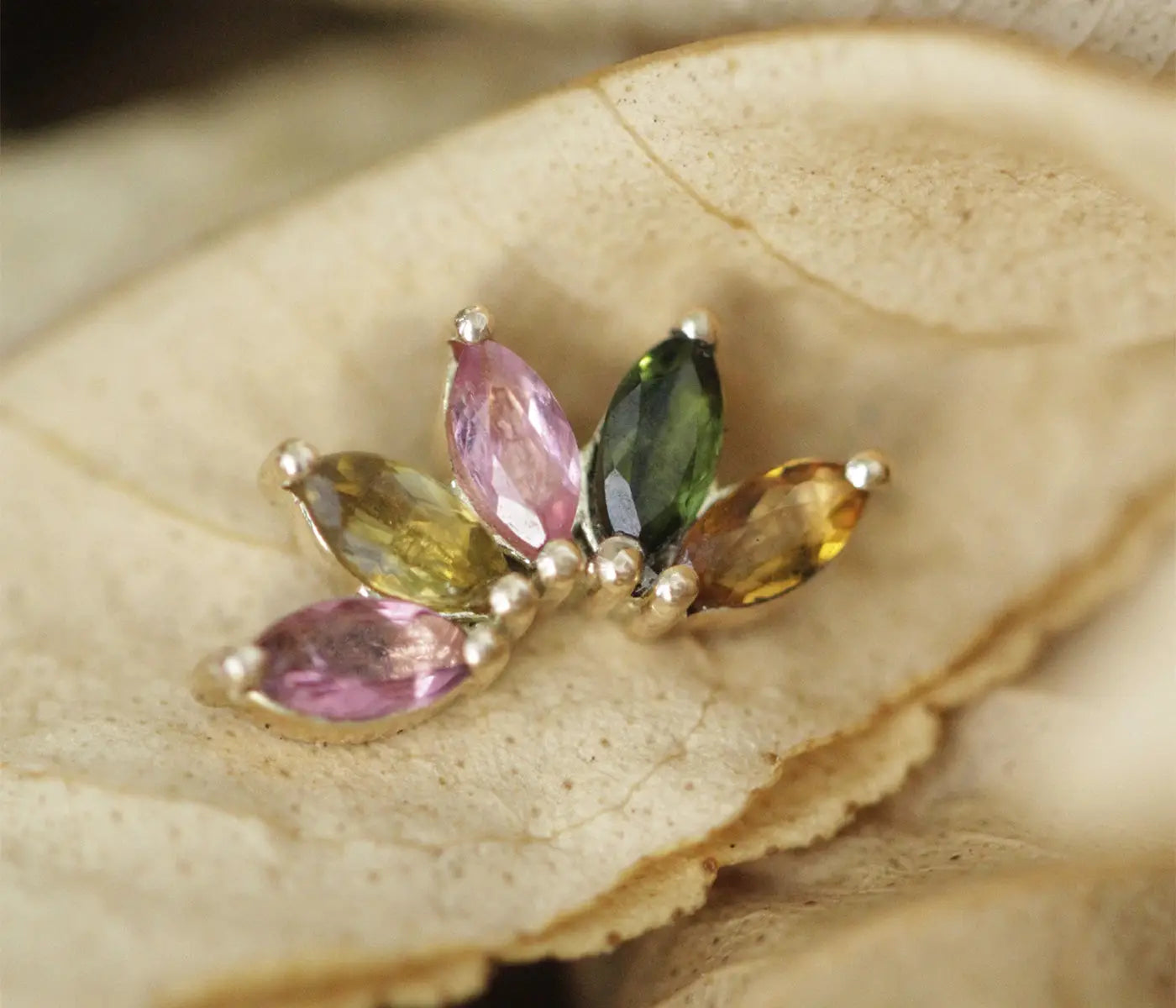
LOW-PROFILE JEWELRY
Flat Back Earrings
Explore threadless jewelry for lobes and many established cartilage placements.
SHOP FLAT BACKS →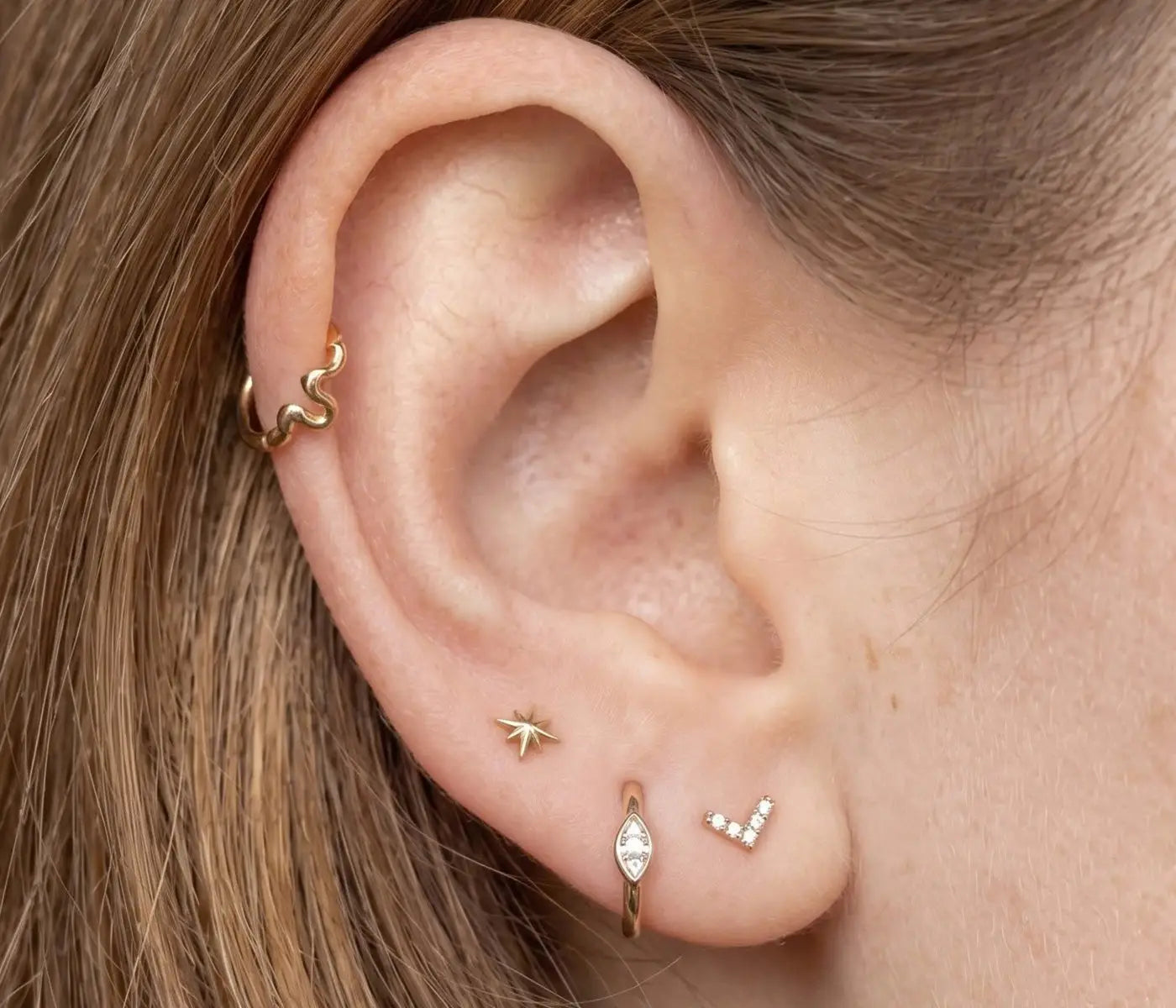
CARTILAGE STYLING
Cartilage Earrings
Discover fine jewelry for helix, flat, conch, tragus and curated-ear styling.
SHOP CARTILAGE JEWELRY →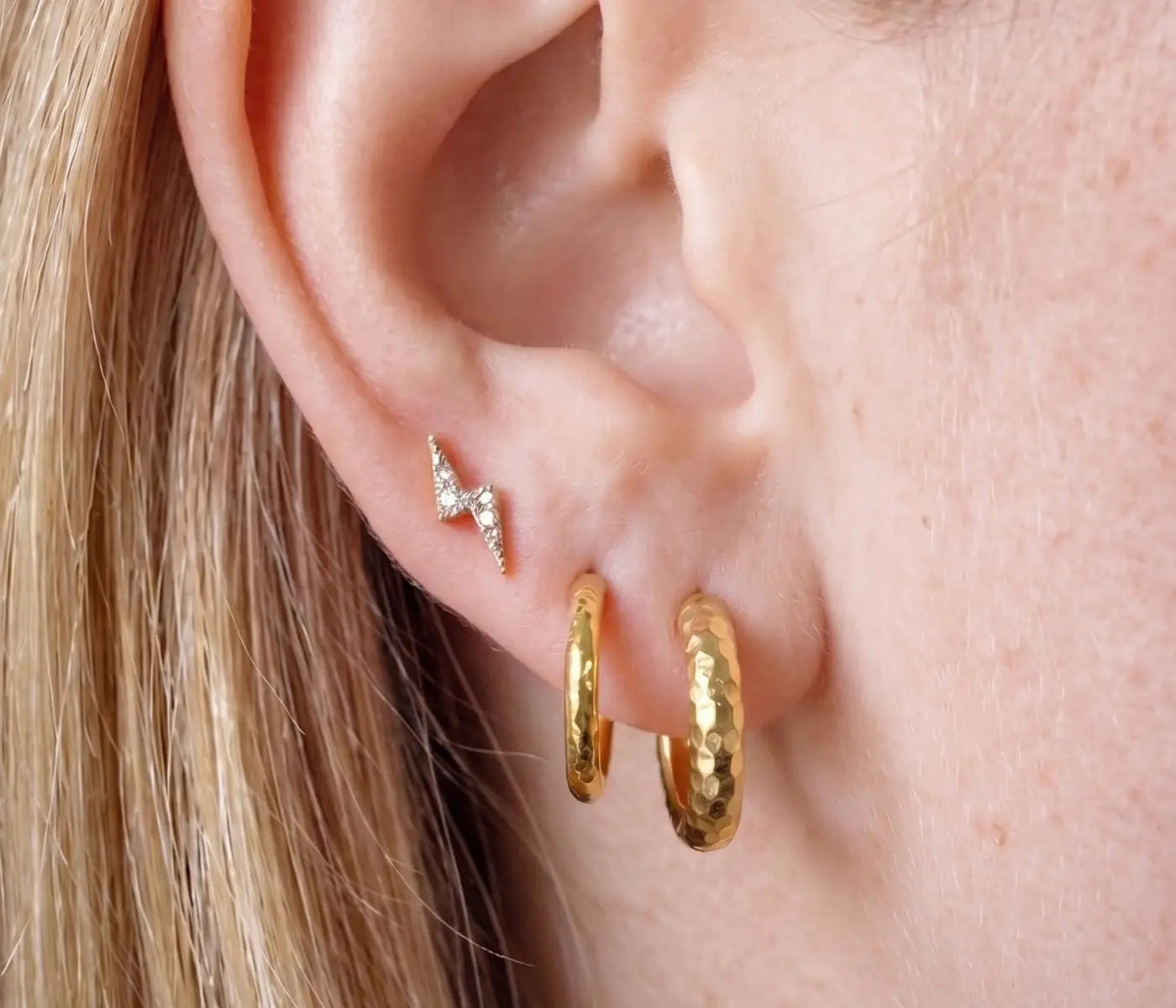
FOR FULLY HEALED PIERCINGS
14k Gold Cartilage Hoops
Explore fine hoops after a professional confirms healing, diameter and fit.
SHOP CARTILAGE HOOPS →❓EAR PIERCING HEALING FAQS
Frequently Asked Questions About Ear Piercing Healing
These answers support the article’s main sections without splitting closely related questions into thin, competing pages.
How long does an earlobe piercing take to heal?
Plan for approximately 3–4 months. The outside may look settled sooner, but the internal channel can still be fragile. Ask a piercer to assess it before changing the jewelry.
How long does a cartilage piercing take to heal?
Most ear cartilage piercings need around 10–12 months, and some take longer. Helix, conch, tragus, rook, daith, flat and forward-helix piercings should be treated as long-term healing commitments.
Can an ear piercing look healed when it is not?
Yes. Piercings heal from the outside inward. The surface can appear calm while the inner channel remains delicate and easily irritated.
When can I change earrings after a new piercing?
Do not rely on one universal date. Wait until the channel is mature and a qualified piercer confirms the new jewelry’s gauge, length or diameter is appropriate. A downsize during healing is different from a decorative style change.
Why is my ear piercing sore again after several months?
Pressure, snagging, sleeping on the ear, headphones, a long post, a tight post or an early jewelry change can reactivate irritation. Have a piercer evaluate fit and angle when soreness keeps returning.
Can I sleep on a healing ear piercing?
Avoid direct pressure, particularly on cartilage. Use a piercing or travel pillow that lets the ear rest in an opening, and keep bedding clean.
Is crust around a new piercing normal?
A small amount of whitish-yellow fluid that dries into crust can occur during normal healing. Thick, foul-smelling discharge with worsening pain, heat, redness or swelling needs prompt healthcare guidance.
Should I remove jewelry if I think my piercing is infected?
Do not remove it on your own solely because infection is suspected. Seek medical care and follow the healthcare professional’s advice about whether suitable jewelry should remain in place.
Does dry Denver weather slow piercing healing?
Dry air may make the surrounding skin feel dry, but do not compensate with unapproved oils, lotions or ointments in the piercing channel. Continue gentle aftercare and ask your piercer before applying products nearby.
ℹ️EDITORIAL & MEDICAL NOTE
General Education, Not a Diagnosis
This article does not diagnose infection or replace care from a licensed healthcare professional. Healing timelines are approximate. A qualified piercer can evaluate placement, angle and jewelry fit; a healthcare professional should assess possible infection or systemic symptoms.
Last reviewed: August 2026.
✨PLAN · PIERCE · HEAL · STYLE
Start with Professional Placement and Support the Full Healing Journey
Explore Nina Wynn studio locations, prepare for your appointment and use the dedicated aftercare guide throughout healing.


