


PIERCING GUIDE
Style along the outer rim.
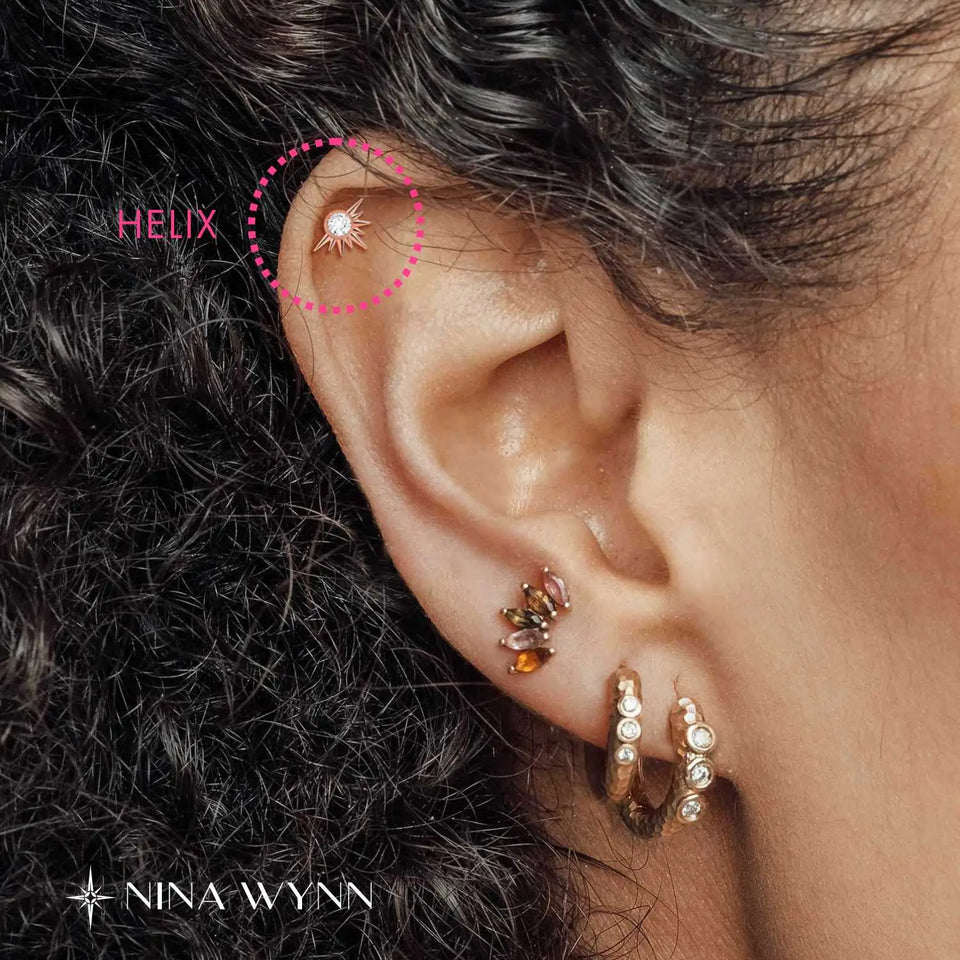
A helix piercing is a cartilage piercing located along the upper outer ridge of the ear. Healing can take many months and varies by person. A fitted flat-back stud may be an initial option, with hoops considered after full healing and a fit assessment.
For Jefferson Park or Tennyson, confirm the service, studio, address and appointment time with Nina Wynn.
Piercing topic expert: Matthew Iles, Nina Wynn Co-Founder and Lead Piercer. Explore his background in anatomy-aware placement, jewelry fit and piercing education.
Further professional guidance: Association of Professional Piercers: Jewelry for initial piercings · Aftercare.
For coordinated placement planning, explore Nina Wynn ear curation.
Helix Placement at a Glance
Read more: Helix Placement at a Glance
Helix piercing is one of the most popular ear piercing styles and a key element in modern ear curation. Located along the upper cartilage ridge of the ear, helix piercings create a refined look that can be worn alone or combined with other piercings for a curated ear stack.
Nina Wynn offers professional sterile needle piercing and jewelry selection, with placement and fit assessed for the individual ear.
Discover our complete Piercing Guide and Piercing Chart before your next piercing.
What Is a Helix Piercing?
A helix piercing is placed along the outer upper cartilage ridge of the ear. Unlike lobe piercings, helix piercings go through cartilage, which requires professional piercing technique and proper aftercare.
The helix is one of the most versatile cartilage piercings because it can accommodate a wide range of jewelry styles and placements.
Types of Helix Piercings
Read more: Types of Helix Piercings
Single Helix
A single helix piercing is placed along the upper ear cartilage and is typically styled with a small stud or hoop.
Double Helix
A double helix features two piercings stacked vertically along the cartilage, creating a modern layered look.
Triple Helix
Three piercings aligned along the cartilage ridge create a bold curated ear design.
Forward Helix
A forward helix piercing is located at the front of the ear where the cartilage meets the head. This placement works beautifully with small gemstone studs.
Why Get a Helix Piercing?
Helix piercings are popular because they offer both subtle elegance and styling flexibility.
- Versatile placement along the ear
- Works well with studs or hoops
- Perfect for building a curated ear
- Allows for stacked piercing designs
Many clients combine helix piercings with other cartilage piercings such as conch piercings, tragus piercings, or rook piercings.
The Helix Piercing Process
Read more: The Helix Piercing Process
Consultation
Your piercer will examine your ear anatomy and mark the placement before beginning the procedure.
Piercing
A sterile hollow needle is used to create the piercing. Professional piercers never use piercing guns for cartilage piercings because they can damage cartilage.
Jewelry Placement
The piercer will insert the initial jewelry, typically a flat back stud designed for healing.
The needle portion is brief. Consultation, preparation, jewelry fitting and aftercare discussion are separate parts of the appointment.
Helix Piercing Pain Level
A helix piercing passes through cartilage and may involve a sharp sensation, pressure or tenderness. Individual sensitivity and anatomy affect the experience.
Most people describe the sensation as:
- A quick pinch
- Individual sensitivity that cannot be predicted by a universal pain score
- Followed by mild pressure
- Minor soreness afterward
Pain tolerance and recovery vary by person. Ask your piercer what the procedure involves and how to protect the area from pressure.
Helix Piercing Healing Time & Aftercare
Read more: Helix Piercing Healing Time & Aftercare
Healing Time
Healing can take many months and varies by person. A calm surface is not proof that the channel is fully healed; ask a piercer to assess progress.
Healing depends on several factors:
- Aftercare consistency
- Jewelry quality
- Sleeping habits
- Individual anatomy
Aftercare Tips
- Use sterile saline wound wash as directed by your piercer, and avoid over-cleaning.
- Avoid touching or twisting the jewelry
- Avoid sleeping on the piercing
- Keep hair products away from the area
- Do not change jewelry too early
You can read more in our Piercing Aftercare Guide and How To Remove Flat Back Earrings
Best Jewelry for Helix Piercings
Professional piercers typically recommend starting with a flat back stud during healing.
Read more: Best Jewelry for Helix Piercings
Recommended Materials
Material labels alone do not establish suitability. Gold-filled, plated and vermeil jewelry are not appropriate for a fresh piercing; initial jewelry also needs the correct fit, finish and closure.
- Titanium with appropriate implant-standard material documentation
- Suitable solid 14k or 18k gold, nickel- and cadmium-free and alloyed for biocompatibility
Popular Jewelry Styles
- Flat back studs
- Gemstone studs
- Small cartilage hoops after healing
Explore Helix Jewelry
Helix Piercing Risks
Potential complications can include:
- Infection
- Swelling or irritation
- Delayed healing
- Migration in rare cases
Professional technique, suitable jewelry and appropriate care can reduce risks, but no piercing is risk-free. Seek medical care promptly for suspected infection, especially worsening pain, heat, swelling, spreading redness or darkening, discharge or feeling unwell. Do not remove jewelry yourself unless a healthcare professional directs you to.
Helix Piercing FAQs
How long does a helix piercing take to heal?
Helix healing can take many months and varies by person. The outside can look calm while the internal channel remains fragile; have a piercer assess healing before changing jewelry.
Does a helix piercing hurt?
You may feel a brief sharp sensation or pressure followed by tenderness. Individual sensitivity and anatomy affect the experience, so no universal pain score can predict yours.
When can I change my helix jewelry?
Ask a piercer to assess healing and fit before changing decorative jewelry. A professional post-fit adjustment during healing is a separate decision from switching to a hoop.
Can I sleep on a helix piercing?
Avoid sleeping directly on a healing helix piercing. Pressure can cause irritation and affect the angle; keep the ear clear of the pillow.
What jewelry is best for healing?
A piercer should select a suitable flat-back system for the actual channel, swelling allowance and anatomy. Appropriate material documentation, finish and fit matter; a metal name or luxury label alone does not establish suitability.
Plan a Helix Piercing in Denver
Explore Jefferson Park and Tennyson through Nina Wynn’s location choices. Confirm the intended service, placement, studio address and appointment time with the team before planning your visit.
Compare Ear Piercing Types
Consider the Detail and the Fit

Compare the Piece and the Components
These are current jewelry examples, not initial-piercing approvals. Have a piercer assess material, gauge, dimensions, connection and healing stage. Online orderability does not establish studio stock or a booked service.

Solitaire Bezel Lab-Grown Diamond Flat Back
A 14K yellow gold decorative top with a lab-grown diamond and threadless connection. Sold as one earring, with one 5 mm titanium post included. A solid 14K gold post is an optional separate purchase; top size does not establish post fit.
View product and current options
18G Threadless Post — 14K Yellow Gold
One post only; decorative end is separate. Choose 4.5, 5.5, 6.5 or 8.5 mm only after a piercer confirms gauge, wearable length and pin compatibility.
View product and current options


