


PIERCING GUIDE
The foundation of a curated ear.
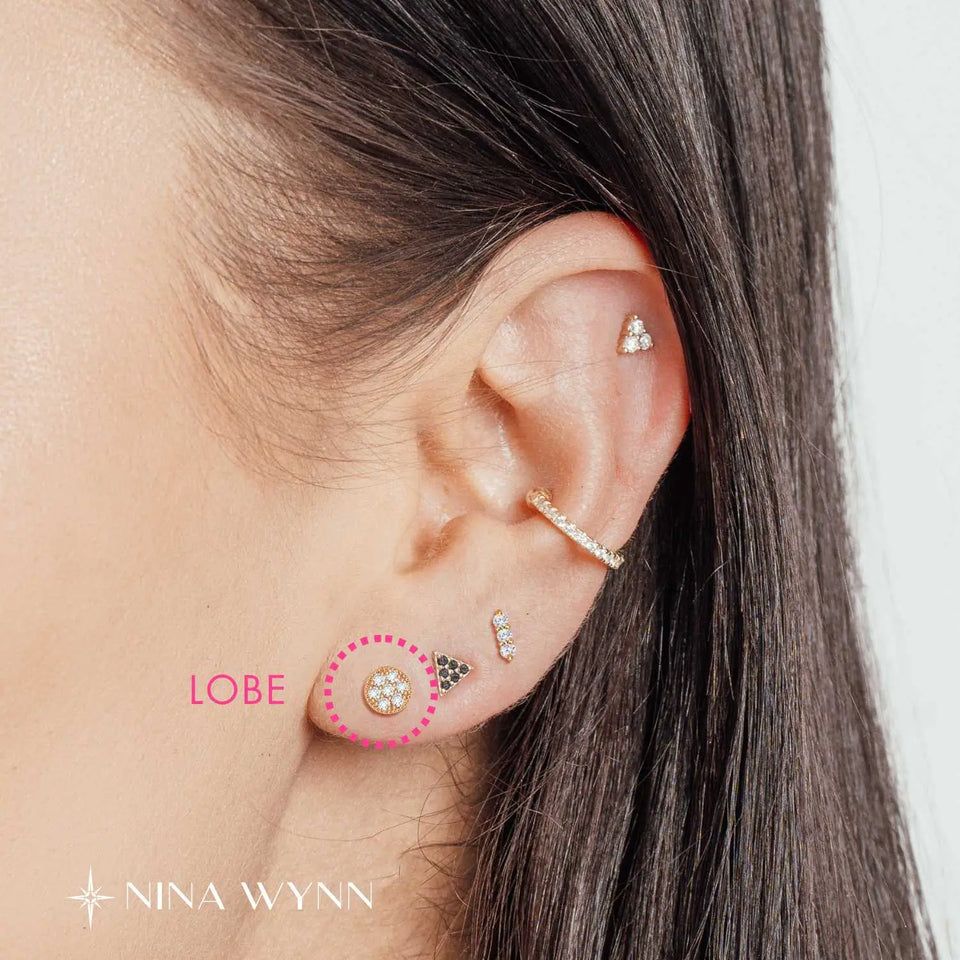
A lobe piercing sits in the soft tissue at the bottom of the ear. From a classic first lobe to upper or stacked placements, its position and spacing can be planned around your anatomy, existing jewelry and future styling.
For Jefferson Park or Tennyson, confirm the service, studio, address and appointment time with Nina Wynn.
Piercing topic expert: Matthew Iles, Nina Wynn Co-Founder and Lead Piercer. Explore his background in anatomy-aware placement, jewelry fit and piercing education.
Further professional guidance: Association of Professional Piercers: Jewelry for initial piercings · Aftercare.
Lobe Placement at a Glance
From a classic first lobe to second, upper and stacked lobe placements, lobe piercings create the foundation for a curated ear. Once healed, they can be styled with flat back studs, diamonds, colorful gemstones, small hoops, huggies and layered earring combinations.
Read more: Lobe Placement at a Glance
| Placement | Soft tissue of the lower earlobe |
|---|---|
| Pain Level | Varies by individual; no universal predictive score |
| Healing Time | Varies by person and placement; professional assessment before a decorative change |
| Initial Jewelry | A professionally fitted system selected for the actual anatomy |
| Jewelry Materials | A piercer should confirm documented material quality, finish and fit; a metal name alone does not establish initial-piercing suitability. |
| Popular Styles | Flat backs, studs, huggies and hoops after healing |
| Popular Variations | First lobe, second lobe, upper lobe and stacked lobe |
Where Is a Lobe Piercing Located?
A traditional lobe piercing is positioned in the soft lower portion of the earlobe. Unlike helix, conch, tragus and other cartilage piercings, a lobe piercing does not pass through ear cartilage.
Read more: Where Is a Lobe Piercing Located
The exact placement can be customized to your anatomy and styling goals. If you plan to create a multi-piercing ear stack, thoughtful spacing between the first, second and upper lobe piercings can leave room for different earring sizes and future placements.
See where the lobe sits in relation to other placements in our Ear Piercing Chart .
How Painful Is a Lobe Piercing?
A lobe piercing passes through soft tissue rather than cartilage. The sensation and recovery vary with the person and the exact placement.
Most people describe the piercing itself as a quick pinch followed by mild warmth, pressure or tenderness. Individual experiences vary based on anatomy, sensitivity and placement.
Pain is individual; a universal score cannot predict your experience.
How Long Does a Lobe Piercing Take to Heal?
Healing varies by person and placement. Follow the care and follow-up plan from the piercer who assessed your ear; a date alone is not clearance to change jewelry.
Read more: How Long Does a Lobe Piercing Take to Heal
Healing times vary from person to person. A piercing may appear healed on the outside while the tissue inside is still recovering, so avoid changing jewelry simply because the exterior looks healed.
Factors That Can Affect Healing
- Jewelry quality and proper fit
- Aftercare consistency
- Sleeping pressure
- Touching or rotating the jewelry
- Hair, makeup and beauty products near the piercing
- Individual anatomy and healing response
Best Jewelry for Lobe Piercings
Flat back studs are a popular option for both new and healed lobe piercings. Unlike a traditional butterfly backing, the smooth disc sits close to the back of the ear, creating a streamlined fit that works especially well for multiple piercings and everyday wear.
Read more: Best Jewelry for Lobe Piercings
Recommended Jewelry Materials
Initial-piercing suitability depends on documented material composition, finish and fit, not the metal name alone. Suitable gold must be appropriately alloyed for biocompatibility; ask a piercer to confirm the exact jewelry.
- Titanium with appropriate implant-standard material documentation
- Suitable solid 14k gold, appropriately alloyed for biocompatibility
- High-quality professional piercing jewelry appropriate for your anatomy
Popular Lobe Jewelry Styles
- Threadless flat back earrings
- 14K gold flat back studs
- Diamond studs
- Colorful gemstone earrings
- Small hoops and huggies after healing
- Ear chains and charms for healed piercings
Explore Lobe Piercing Jewelry
Discover flat backs, solid 14K gold earrings, diamonds and genuine gemstones selected for lobe and curated ear styling.
Shop Lobe Piercing JewelryFirst, Second & Upper Lobe Piercings
Read more: First, Second & Upper Lobe Piercings
First Lobe Piercing
The first lobe piercing is typically positioned near the center of the lower earlobe. It creates the foundation for classic earrings as well as more elaborate multi-piercing ear stacks.
Second Lobe Piercing
A second lobe piercing is usually placed slightly above or beside the first lobe piercing. Smaller studs, gemstones and delicate hoops can create a layered look while allowing the first-lobe jewelry to remain the focal point.
Upper Lobe Piercing
An upper lobe piercing sits higher on the earlobe as the soft tissue begins transitioning toward cartilage. Placement should be customized to the anatomy of the ear and the jewelry you plan to wear.
Stacked Lobe Piercing
Stacked lobe piercings use intentionally varied placements rather than a simple straight line. They can help fill open space on the earlobe and create a more personalized curated-ear composition.
Are Flat Back Earrings Good for Lobe Piercings?
Yes. Flat back earrings are popular for lobe piercings because the smooth backing sits close to the ear rather than protruding behind it like a traditional butterfly back.
They are especially useful for people with multiple ear piercings and for anyone who prefers comfortable jewelry designed for extended everyday wear.
Lobe Piercing Aftercare
Proper aftercare helps minimize unnecessary irritation while your lobe piercing heals.
Read more: Lobe Piercing Aftercare
Lobe Piercing Aftercare Tips
- Clean the piercing with sterile saline as directed by your piercer.
- Avoid touching, twisting or rotating the jewelry unnecessarily.
- Avoid sleeping directly on a fresh piercing.
- Keep makeup, skincare and hair products away from the piercing site.
- Avoid removing or changing initial jewelry too early.
- Follow your piercer's recommendations for downsizing and jewelry changes.
For more detailed information, visit our Piercing Aftercare Guide .
Lobe Piercing Risks & Irritation
Lobe piercings are generally straightforward when performed professionally, but any piercing can experience irritation or complications while healing.
Potential issues can include:
- Swelling or tenderness
- Temporary irritation
- Jewelry pressure or snagging
- Delayed healing
- Infection
- Migration or stretching in some cases
Proper placement, professional piercing technique, suitable jewelry and consistent aftercare all play an important role in supporting the healing process.
If you suspect infection, seek medical care. Ask a clinician before removing jewelry from a potentially infected piercing.
Lobe Piercing FAQ
How long does a lobe piercing take to heal?
Healing varies by person and placement. The outside may appear healed while the channel is still recovering, so follow your piercer's care and follow-up plan rather than using a date alone as clearance.
How painful is a lobe piercing?
A lobe piercing passes through soft tissue rather than cartilage. You may feel a brief pinch, warmth or tenderness, but individual anatomy and sensitivity affect the experience.
What jewelry is best for a new lobe piercing?
A piercer should select jewelry with an appropriate style, documented material, finish and fit for your anatomy and initial swelling. A flat-back system may be suitable; the metal name alone does not establish suitability.
When can I change my lobe piercing jewelry?
Avoid changing the initial jewelry simply because the outside of the piercing looks healed. Have a piercer assess healing and fit before a decorative change.
Can I sleep in flat back earrings?
Flat-back earrings have a smooth disc behind the ear. During healing, avoid sleeping directly on the fresh piercing; a low-profile backing does not remove the effects of pressure.
Can I get more than one lobe piercing?
Second, upper and stacked lobe placements can create a layered look. A piercer should assess the available tissue, spacing, existing jewelry and future plans before deciding which placements suit your ear.
What is the difference between a lobe and cartilage piercing?
A lobe piercing passes through the soft tissue at the bottom of the ear. Cartilage placements such as helix, conch, tragus, rook, daith and flat piercings pass through firmer tissue and require a different anatomy and healing assessment.
Explore Other Ear Piercing Types
Building a curated ear? Learn about other popular ear piercing placements, healing times and jewelry options.
Or compare multiple placements together in our Complete Ear Piercing Chart .
Shop Piercing Jewelry Online
Nina Wynn piercing jewelry is designed for curated styling and comfortable everyday wear. Explore solid 14K gold flat backs, diamonds, genuine gemstones, hoops and jewelry for lobe and cartilage piercings online.
Plan a Lobe Piercing in Denver
Explore Jefferson Park and Tennyson through Nina Wynn’s location choices. Confirm the intended service, placement, studio address and appointment time with the team before planning your visit.
Consider the Detail and the Fit

Compare the Piece and the Components
These are current jewelry examples, not initial-piercing approvals. Have a piercer assess material, gauge, dimensions, connection and healing stage. Online orderability does not establish studio stock or a booked service.

Solitaire Bezel Lab-Grown Diamond Flat Back
A 14K yellow gold decorative top with a lab-grown diamond and threadless connection. Sold as one earring, with one 5 mm titanium post included. A solid 14K gold post is an optional separate purchase; top size does not establish post fit.
View product and current options
18G Threadless Post — 14K Yellow Gold
One post only; decorative end is separate. Choose 4.5, 5.5, 6.5 or 8.5 mm only after a piercer confirms gauge, wearable length and pin compatibility.
View product and current options


